
Standard dash cams helped fleets bring basic visibility to the road. But today, rising collision risk, higher insurance premiums, and stricter safety expectations are exposing the limits of cameras that only record what already happened.
For fleets that run critical physical operations, moving from simple recording to accurate, AI-powered prevention can be the difference between reacting to incidents and preventing them in the first place.
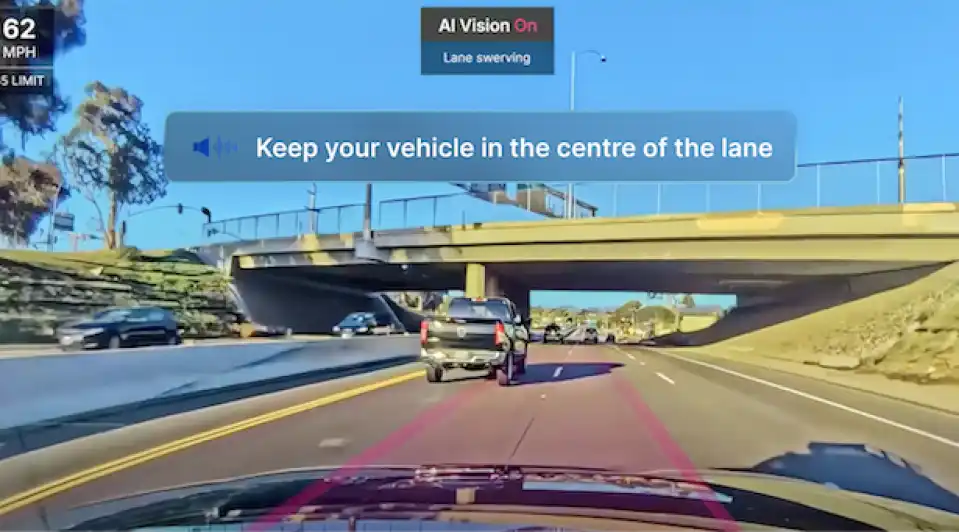
AI dash cams go further by detecting unsafe behavior in real time, alerting drivers in the cab, and feeding structured coaching programs that actually change behavior. This blog walks through the differences between AI and standard dash cams, how they fit in a modern fleet safety stack, and how to evaluate them for your own operation.
What’s the difference between AI dash cams and standard fleet dash cams?
At a high level, standard dash cams record incidents, while AI dash cams help prevent them. While both provide visibility, the technology underlying each serves a fundamentally different purpose in a safety program: one acts as a digital witness for what has already occurred, while the other acts as an intelligent co-driver to help avoid the next accident.
What are standard fleet dash cams?
Standard or legacy fleet dash cams are simple recording devices that capture video during continuous driving or when they detect G-force events like harsh braking. They store footage for evidence and exoneration, but lack the ability to understand driver behavior or provide real-time warnings before a collision.
Where they fall short:
- They do not understand what a driver is doing, only that a bump or impact occurred.
- Safety teams must sift through large volumes of video to find relevant moments.
- There is no built‑in way to warn drivers in real time before a collision.
What are AI dash cams?
AI dash cams use edge computing and computer vision to move beyond simple recording. By processing video in real time, they identify risky behaviors — like distraction and drowsiness — triggering instant in-cab alerts that allow drivers to correct actions before a collision occurs.
Beyond immediate prevention, AI systems like the Motive AI Dashcam Plus automatically upload event-based clips and risk scores to a centralized platform. This data enables safety managers to implement proactive, structured coaching programs rather than manually sifting through hours of raw footage. When combined with accurate AI that detects 20+ safety events with up to 99% accuracy, fleets can prevent more collisions with fewer false alerts.