
Driver error is a factor in more than 90% of vehicle collisions, driven by distraction, speeding, and fatigue. For modern fleets, the question is no longer if you should use AI to see risk sooner — it’s how to choose technology that’s accurate, trusted, and proven.
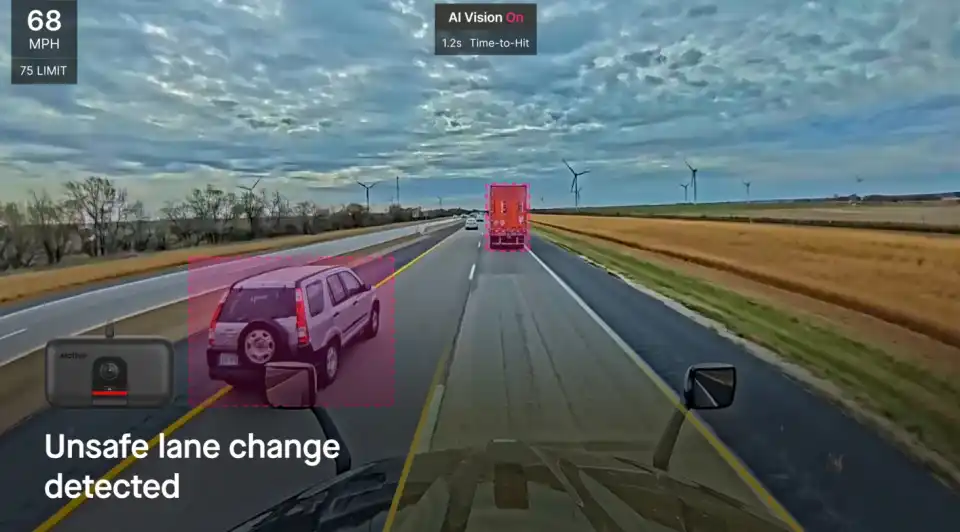
AI accident detection, using AI dash cams and telematics, detects unsafe driving and potential incidents in real time, alerting the right people in seconds.
A new IDC Business Value white paper from technology analyst firm International Data Corporation (IDC) quantifies the business impact of Motive’s accurate AI. The Motive-sponsored study, “The Business Value of Motive’s Accurate AI for Fleet Safety,” is based on in-depth interviews with six organizations using Motive’s AI-powered driver safety solutions across logistics, construction, sanitation, and related industries. Together, IDC’s findings show how Motive’s accurate AI and connected safety platform give fleets real-time visibility, better coaching, and tighter control over risk on the road.
In this blog, we’ll break down how AI dash cams detect unsafe driving, and why IDC’s findings should shape how fleets and insurers think about risk.
What is AI accident detection, and who is it for?
AI accident detection is technology that uses AI‑enabled cameras plus vehicle sensors to automatically detect unsafe driving events and incidents in real time. It is designed for fleet managers, safety teams, professional drivers, and insurance providers who require real-time visibility into vehicle safety.
Instead of passively recording hours of video, AI dash cams continuously analyze what’s happening inside and outside the vehicle and flag only the moments that matter. This technology is central to how:
- Fleet managers and safety teams monitor risk across hundreds or thousands of vehicles.
- Drivers get real‑time, in‑cab alerts that help them self‑correct before something goes wrong.
- Insurance providers and risk analysts evaluate exposure, investigate claims, and reward fleets that can prove a strong safety posture.
BUTTON: Roush cuts collision rate in half and improves driver safety with Motive
Why do organizations with fleets – and insurers – need AI accident detection now?
Organizations with fleets, and their insurers, need AI accident detection because they are under pressure from every direction: rising claims costs, tighter customer SLAs, regulatory scrutiny, and an insurance market that increasingly expects objective proof of safety performance. At the same time, safety teams are often small, stretched thin, and responsible for diverse vehicle types and operating environments.
AI accident detection addresses these challenges in three ways:
- Faster emergency and incident response. When a serious collision or hard impact occurs, the system can flag it in seconds, helping safety teams verify severity, contact the driver, and initiate response workflows without waiting for a phone call.
- Lower collision severity and total cost. By catching behaviors like tailgating, speeding, and distraction before they turn into crashes, fleets can reduce high‑severity incidents that drive up repair, medical, and legal costs.
- Better accountability and fairness. High‑quality video and data make it easier to exonerate drivers when they’re not at fault and to coach constructively when they are. That transparency is equally valuable to underwriters and risk analysts looking for reliable loss‑control partners.
In short, AI accident detection is how fleets move from reactive incident management to proactive risk prevention, especially when it’s part of a unified platform like Motive that connects safety, operations, and finance data in a single system.